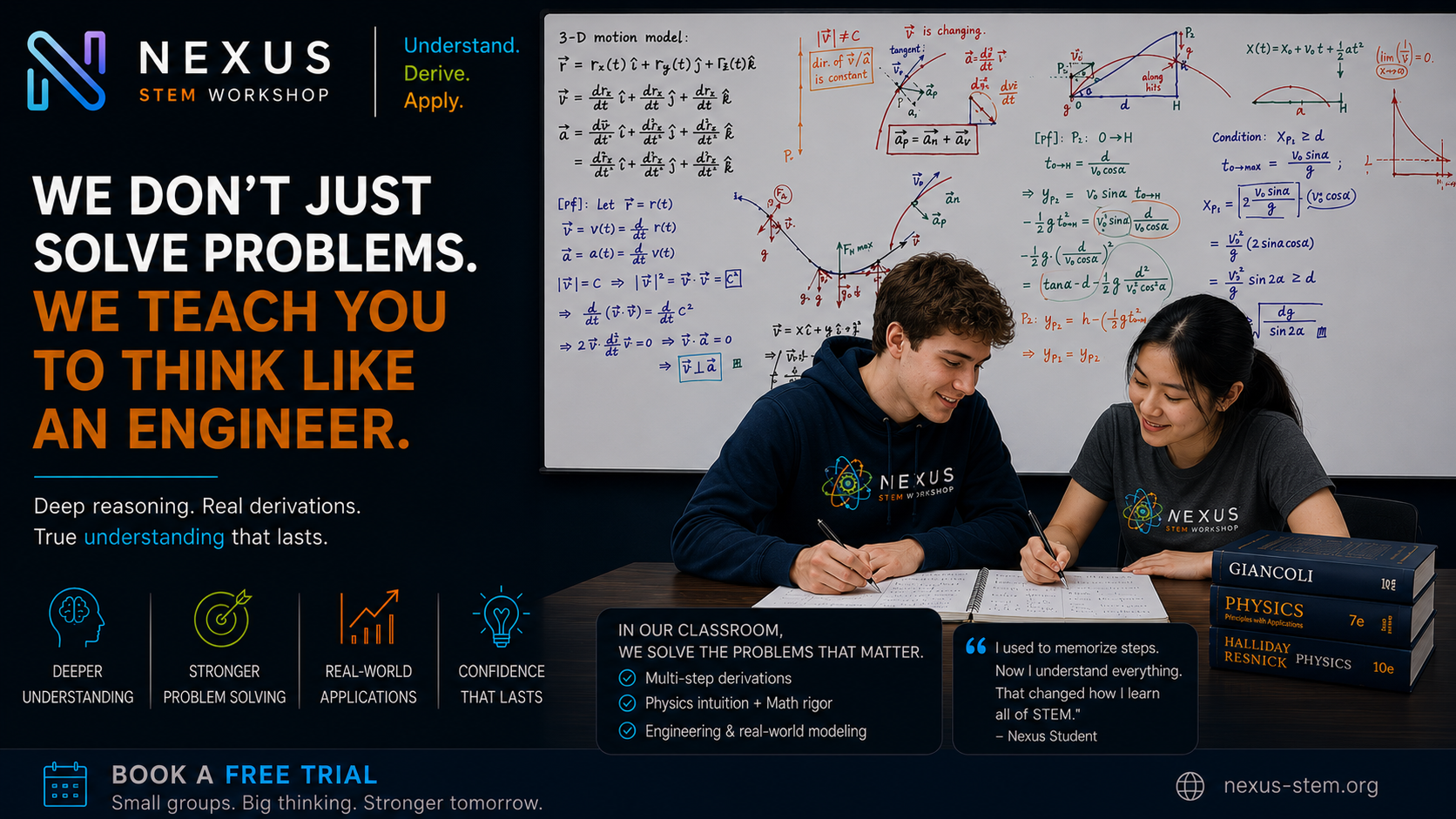
Beyond Memorization.

Quantitative reasoning and physics learning for students who want to understand, not just repeat.

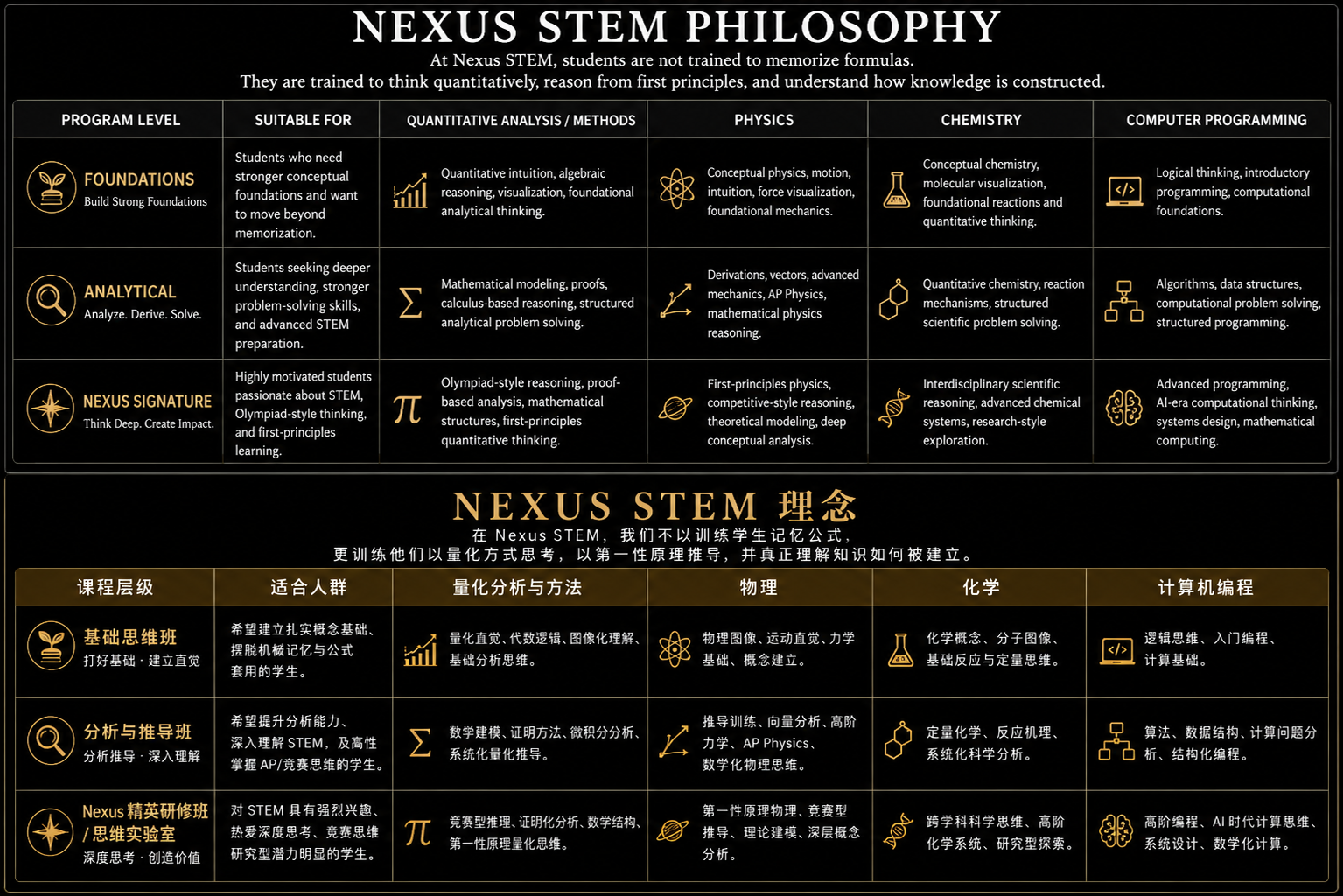
Nexus STEM Workshop helps students build deep understanding in quantitative reasoning, physics, and analytical problem solving through derivation, conceptual clarity, and guided exploration — so they can approach unfamiliar problems with confidence.

≤5
Students per class
20
Hours per Learning Set
PhD+
Expert instructors
100%
Interdisciplinary
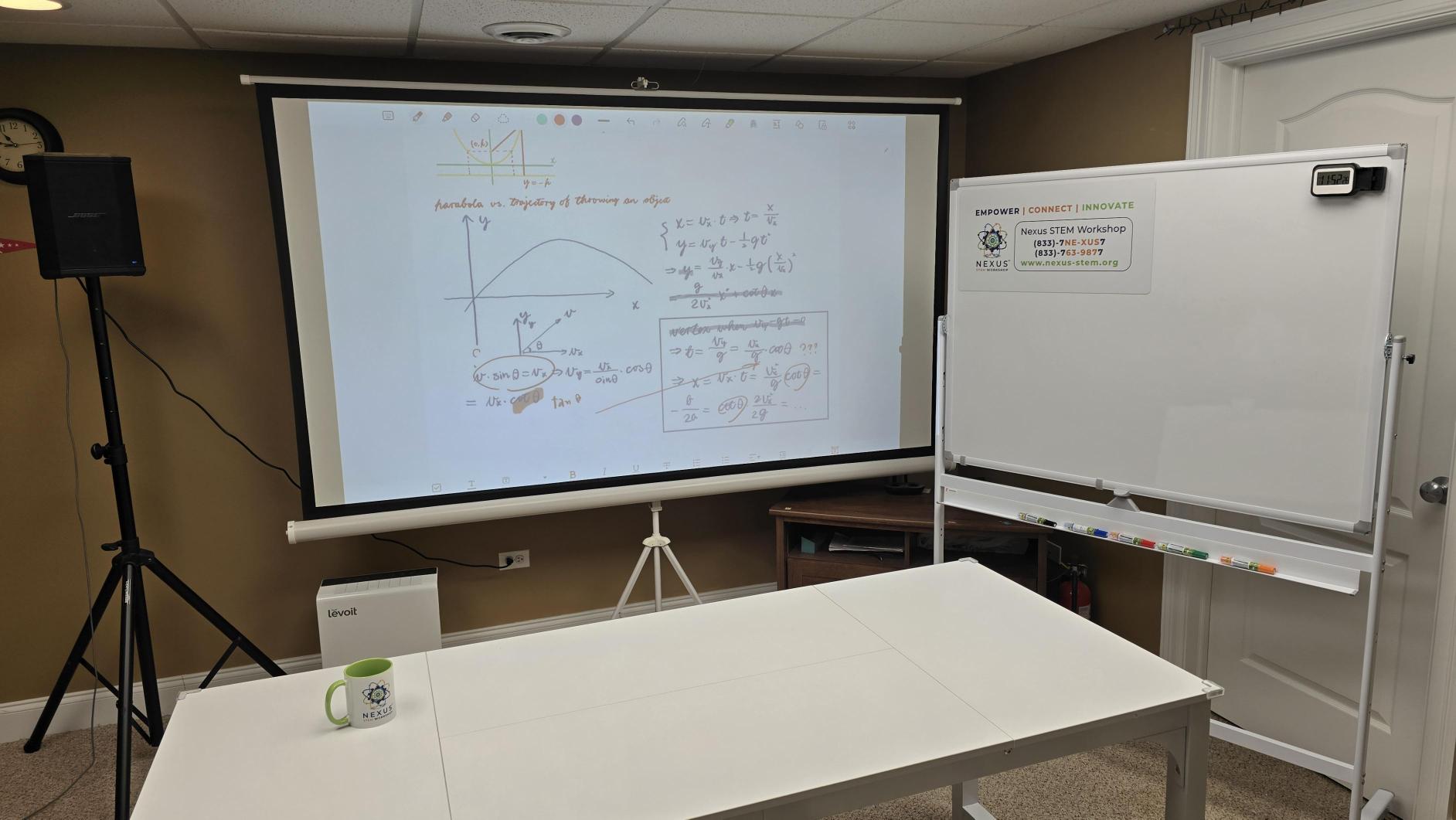
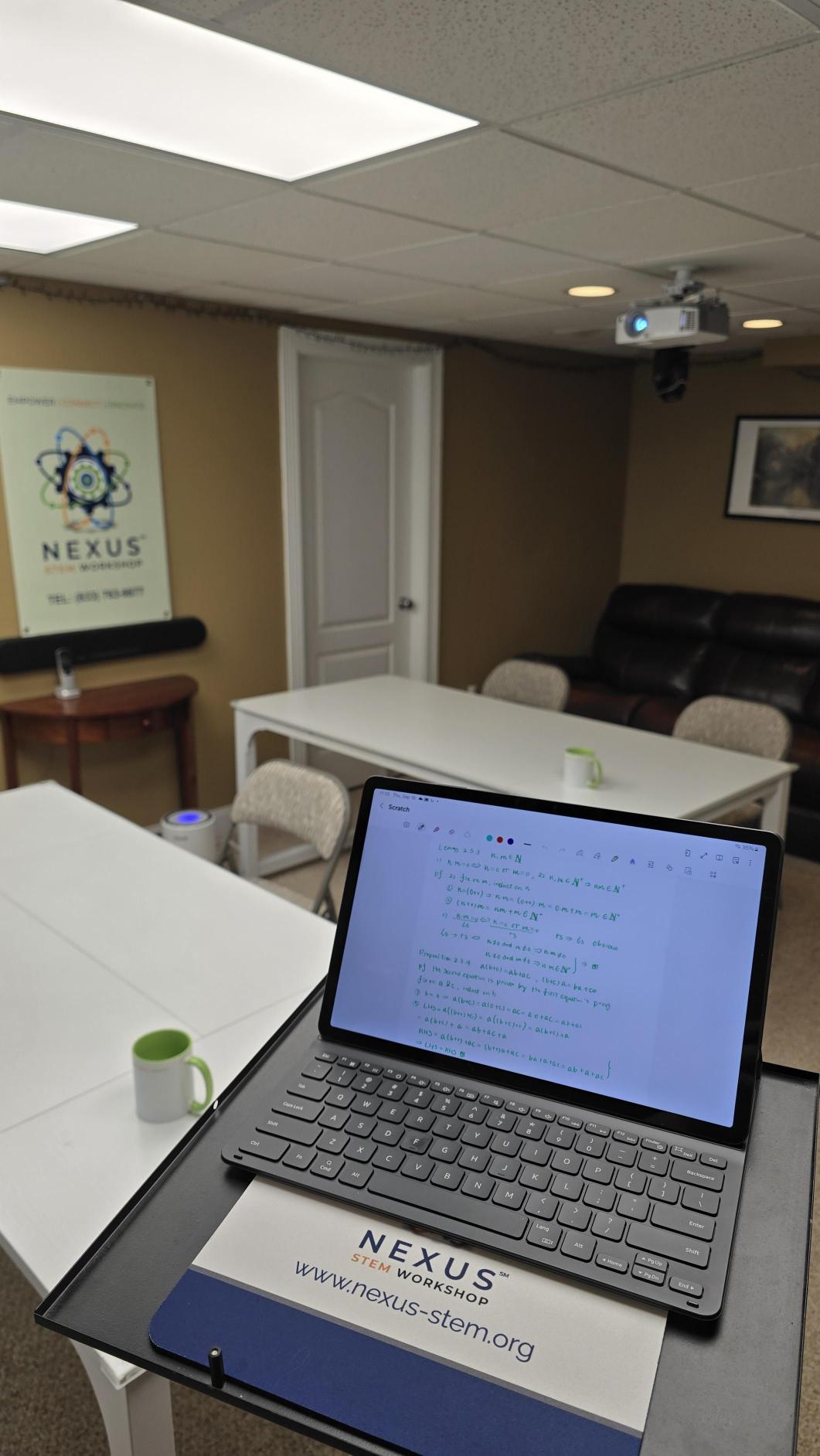
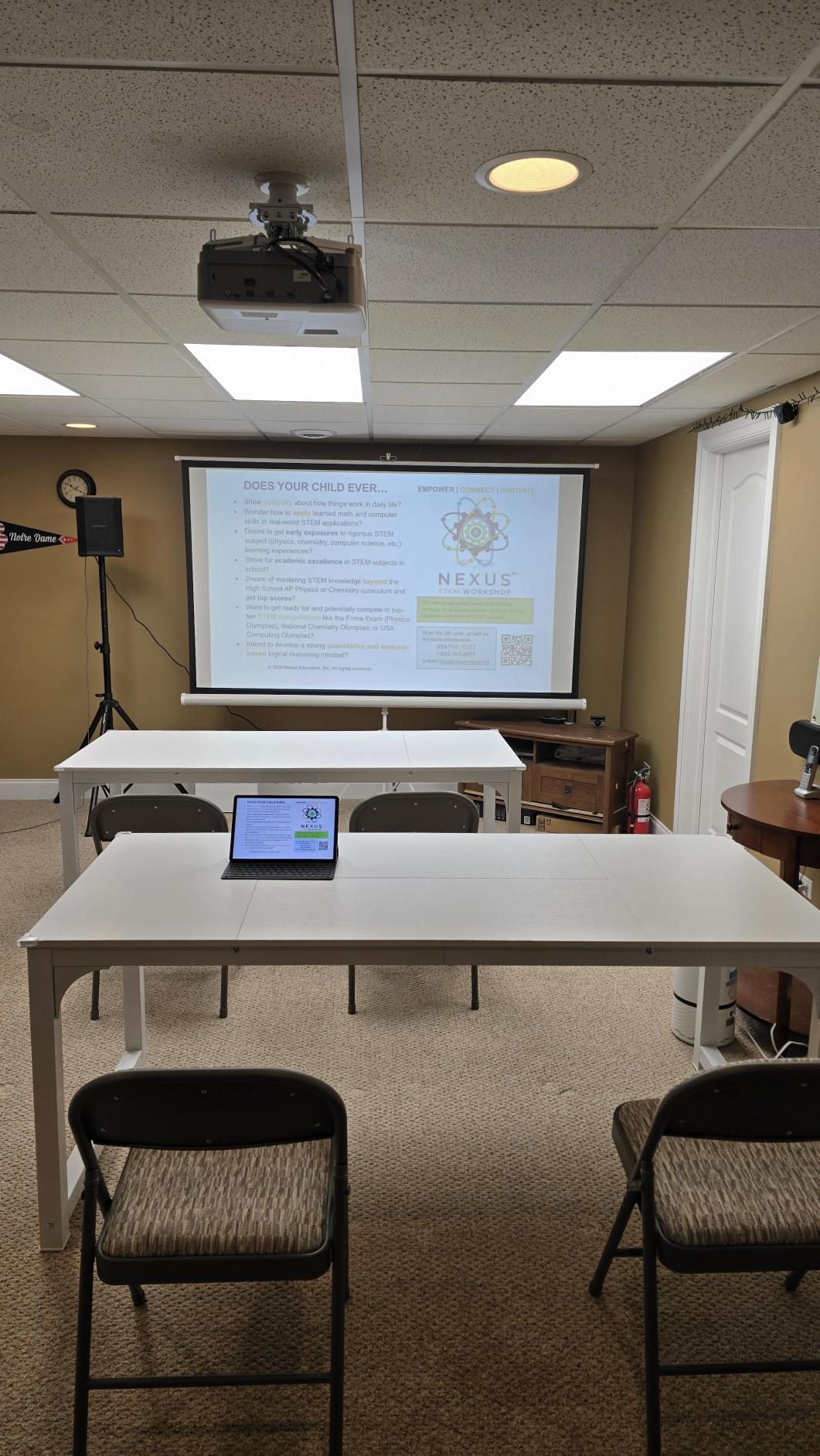
Nexus STEM Workshop classroom

Does This Sound Familiar?

If any of these describe your student, Nexus was created for exactly them.

01
Memorizes formulas but forgets them later
02
Completes homework but struggles on tests
03
Panics when problems look unfamiliar
04
Performs procedures without understanding concepts
05
Loses confidence in advanced STEM courses
06
Feels school moves too quickly or mechanically

Every one of these has a solution.

Our UnderstandDeriveApply method replaces rote memorization with genuine comprehension — so students stop forgetting formulas, start handling unfamiliar problems, and build lasting confidence in STEM.

Nexus STEM Workshop

Nexus STEM Workshop is a Naperville-based STEM enrichment program founded in August 2025. We provide rigorous, small-group learning experiences in quantitative reasoning and physics for middle- and high-school students who want to understand, not just repeat.

Our approach replaces rote memorization with first-principles thinking, guided derivation, and cross-disciplinary problem solving. We are a fully insured start-up, permitted and approved by the City of Naperville, operating out of a modern residential workshop space at 2203 Spartina Rd.

Our teaching methods are built around seven core practices — from Socratic dialogue and first-principles thinking to computational integration with Python — all designed to replace memorization with genuine understanding.

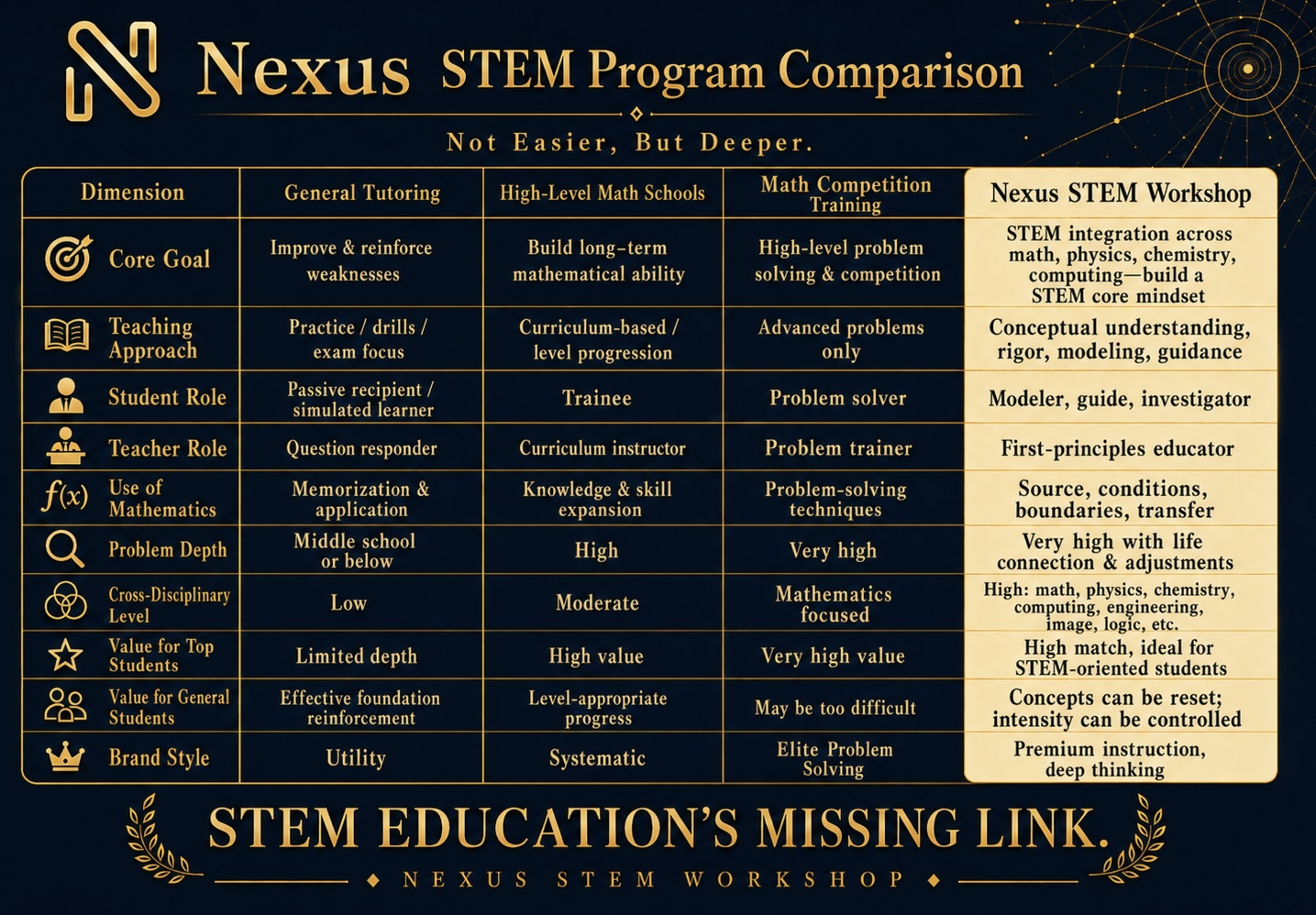
See how we compare to traditional tutoring →

Understand Derive Apply

1

Understand

Students learn what concepts actually mean, not just how to plug numbers into equations. Conceptual clarity before formulas.

2

Derive

Students explore how formulas and relationships are built from first principles. Derivation makes concepts memorable and reduces reliance on rote recall.

3

Apply

Students practice reasoning through unfamiliar problems instead of matching patterns. Builds adaptability to handle any challenge.

"As a student, I was often frustrated by education built around memorization without understanding. Nexus was created to provide the kind of STEM learning experience that many students rarely encounter in traditional classrooms — rigorous, connected, analytical, and rooted in genuine understanding."

Core belief: True learning begins when students start asking why.

The Nexus Student

Nexus is designed for middle- and high-school students who are ready to go beyond memorization.

🔬

Intellectually Curious

Asks "why" and wants real answers

🧠

Deep Thinker

Enjoys exploring ideas thoroughly

🚀

STEM-Interested

Passionate about science and math

🎓

College-Bound

Preparing for AP exams and competitions

📕

Problem Solver

Seeks to build genuine problem-solving ability

🎯

Frustrated by Rote Learning

Wants more than memorization

Six Pillars of Differentiation

Conceptual Understanding

Teach the meaning behind every formula. Students learn to think, not just plug numbers.

Quantitative Reasoning

Develop ability to reason with numbers, interpret data, and model real-world phenomena mathematically.

First-Principles Thinking

Deconstruct problems from fundamental truths rather than accepting formulas at face value.

Guided Derivation

Every formula is derived, not declared. Students know where equations come from and why they work.

Analytical Problem Solving

Tackle unfamiliar challenges through logical analysis, not memorized templates.

</>

Computational Integration

Python coding to model physics and verify results.

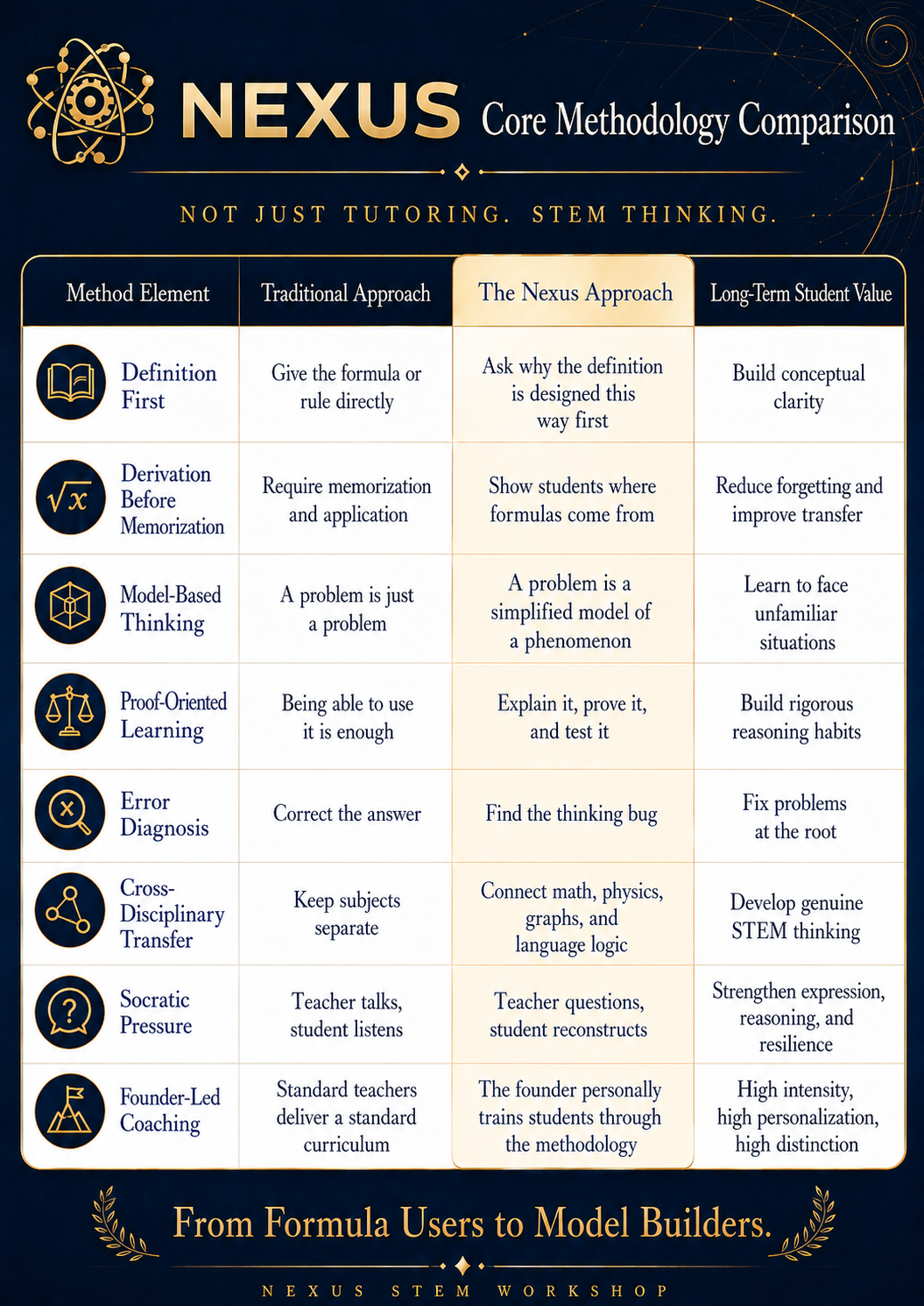
Traditional Tutoring vs. Nexus

Method ElementTraditional ApproachNexus ApproachStudent Value
Definition FirstGive formula/rule directlyAsk why the definition is designed this way firstBuild conceptual clarity
Derivation Before MemorizationRequire memorization and applicationShow where formulas come fromReduce forgetting, improve transfer
Model-Based ThinkingA problem is just a problemA problem is a simplified model of a phenomenonLearn to face unfamiliar situations
Proof-Oriented LearningUsing it is enoughExplain, prove, and test itBuild rigorous reasoning habits
Error DiagnosisCorrect the answerFind the thinking bugFix problems at the root
Cross-Disciplinary TransferKeep subjects separateConnect math, physics, graphs, logicDevelop genuine STEM thinking
Socratic PressureTeacher talks, student listensTeacher questions, student reconstructsStrengthen expression, reasoning, resilience
Founder-Led CoachingStandard teachers, standard curriculumFounder personally trains through the methodologyHigh intensity, high personalization, high distinction

"The future belongs to students who can think."

AI Era illustration

AI can increasingly solve routine textbook exercises. The future belongs to students who can:

  • Reason independently
  • Model complex situations
  • Connect ideas across disciplines
  • Analyze unfamiliar problems
  • Think both quantitatively and creatively

Nexus is designed to help students build those abilities.

Foundations Track

All Physics programs: $80 / 2.5-hr session (8 sessions = 20 learning hours). Each Learning Set is offered in two tracks: Regular Track (AP exam excellence) and Competition Track (F=ma Exam, AMC). Teaching methods are identical; examples and problem sets differ.

Physics I

Measurements, Motion & Newton's Laws
  • Basic physics concepts, units, measurements
  • Displacements and vector calculations (trigonometry)
  • Motion with constant speed and constant velocity
  • Limits, derivatives for velocity & acceleration
  • Free fall, parabolic curves and motion
  • Circular motion & simple harmonic motion (SHM)
  • Newton's Three Laws of Motion

Physics II

Work, Energy & Momentum
  • Forces, Work, and Power
  • Kinetic Energy and Work-Energy Theorem
  • Gravitational & elastic potential energy
  • Momentum and impulse; collisions
  • Forces and energy in angular kinematics
  • Torque and angular acceleration
  • Conditions of equilibrium; stress & strain

Physics III

Fluids, Waves & Acoustics
  • Pressure in fluids and buoyancy
  • Fluid flow and Bernoulli's Equation
  • Waves and mathematical representations
  • Speed and energy of a wave
  • Sound wave properties; resonance
  • Sound wave and music theory
  • Doppler Effects and Shock waves
Coming Soon

Chemistry I

Periodic Table & Atom — $80 / 2.5-hr session
  • Intro to chemistry & lab safety
  • Atomic structure
  • Periodic table
  • Chemical bonding and reactions

Signature Workshops

Short, high-impact sessions focused on specific skills and concepts.

Why Formulas Work

Derivation and intuition behind everyday formulas

Physics Through Quantitative Reasoning

Building physical intuition through reasoning, not rote application

Modeling the Real World

How math and physics create simplified models of complex real-world phenomena

How AI Changes STEM Learning

What AI can and cannot do — why human reasoning matters more than ever

Learning Set Structure

8 sessions × 2.5 hours = 20 focused learning hours. Each session includes a 15-minute break.

Typical Class Flow

1

Recap & Homework Review

15 minutes — Review previous material, address questions

2

Interactive Presentation

60–90 minutes — 5+ worked examples, Socratic discussion

3

Python Coding Applications

~30 minutes — Model physics, verify math computationally

Support: Maximum 5 students per session for individual attention. Email support between classes — instructors answer follow-up questions. Regular progress reports sent to parents.

Meet Our Team

PhD+ expert instructors with deep industry and teaching experience.

BC

Bradford C.

MBA, Notre Dame

20+ years part-time teaching, 5,000+ students taught. Former management at major US consulting firms. Expertise: AP Physics, F=ma Exam, AMC exam. Interdisciplinary advanced STEM advocate.

KJ

Kevin J.

Ph.D., Mechanical Engineering

9 years as Principal Engineer in industry. Expertise in computational fluid mechanics. HPC: Fortran, CUDA, C++, Python. Passionate about making physics fun & relatable.

RM

Rachel M.

Ph.D., Polymer Science

Chief Product Designer in semiconductor industry. Applies chemistry to cutting-edge technology. Interactive, real-world teaching style.

JL

Jessica L.

M.S., Chemistry

Academic research & laboratory instruction. Semiconductor industry professional. Expertise: Gen. Chem I & II, Spectroscopy, Organic Chemistry. Hands-on, adaptable across learning styles.

Note: Sometimes two instructors teach in one session.

Get in Touch

Start a FREE Trial Session

Try Physics or Chemistry — no commitment required.

Phone
(833) 763-9877
Email
info@nexus-stem.org
Support Email
support@nexus-stem.org
SMS / Text
(708) 668-9073 (opt-in required — text us first)
Location
2203 Spartina Rd, Naperville, IL 60564
✓ Fully Insured — Proof Available Upon Request

SMS Communication

Opt-in via text, online form, or paper form. Messages include class confirmations, reminders, homework notifications, and program updates. Up to 20 messages per week (varies). Reply STOP to opt out, HELP for assistance.

Standard message and data rates may apply. Consent is NOT a condition of purchase or enrollment.